Charlotte, NC · Crawl space report
Crawl space encapsulation and repair for Charlotte homes
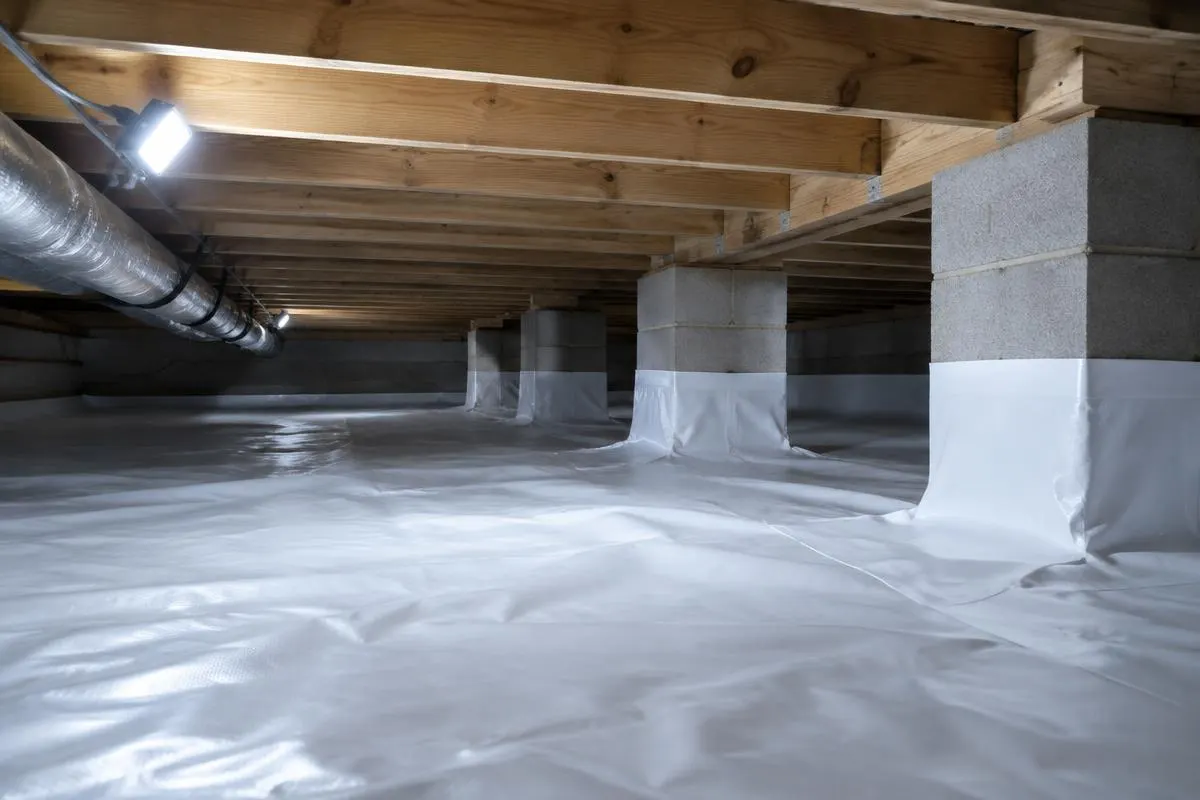
Charlotte Pro Crawl Space connects Charlotte-area homeowners with independent local contractors for crawl space encapsulation, vapor barriers, dehumidifiers, drainage and sump pumps, and structural repairs like sagging floors and rotted joists. Most requests start with encapsulation: sealing the crawl space so the air and wood under your floors stay dry.
This page is set up like an inspection report: what people notice, what it usually points to, how the fixes compare and what published price ranges look like, before anyone quotes you.
Inspection checklist
Typical items
- Moisture
Air humidity & wood moisture
Meter readings on joists and sill
- Moisture
Standing water
Low corners, after-rain marks
Vapor barrier
Coverage, tears, loose seams
Insulation
Fallen, damp or missing batts
Wood rot
Probe sill plates and joist ends
Pests
Mud tubes, droppings, entry points
Vents & openings
Open, sealed, damaged screens
Section 1 · Observations
What you notice, and what it is often related to
A symptom points to a likely cause, not a diagnosis. Each one links to the fix it most often leads to; an inspection confirms which applies to your house.
Musty smell indoors
MoistureOften related to: Humid crawl space air rising into the house
See the fix →Cupping or soft floors
Often related to: Damp subfloor, rotted or overspanned joists
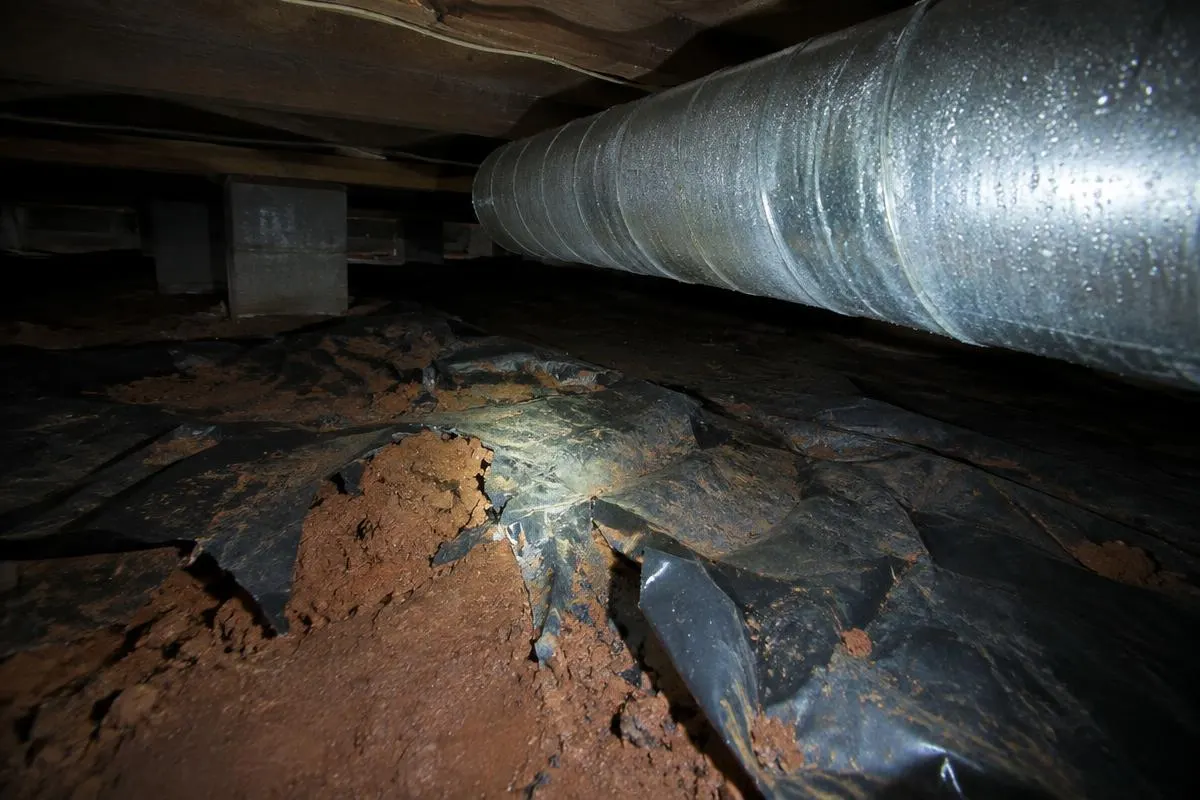
See the fix →Condensation on ducts
MoistureOften related to: Humid outside air meeting cool ductwork
See the fix →Standing water after rain
MoistureOften related to: Runoff and slow-draining clay soil
See the fix →Mold on joists
MoistureOften related to: Sustained high humidity on the framing
See the fix →Torn or missing plastic
Often related to: Exposed soil releasing moisture
See the fix →Pests under the house
Often related to: Open vents, debris and damp wood
See the fix →High power bills
Often related to: Leaky rim, open vents, failed insulation
See the fix →
Water collecting under the house? See crawl space sump pump installation in Charlotte.
Section 2 · Options
Encapsulation vs. vapor barrier vs. repair
These three get confused often. They solve different problems, and plenty of homes need more than one.
| Fix | What it is | When it fits | Typical HomeGuide range |
|---|---|---|---|
| Encapsulation | Liner on floor and walls, vents and air leaks sealed, dehumidifier added. | Condensation, musty air or damp wood; the space needs to stay dry year-round. | $3,000–$15,000 |
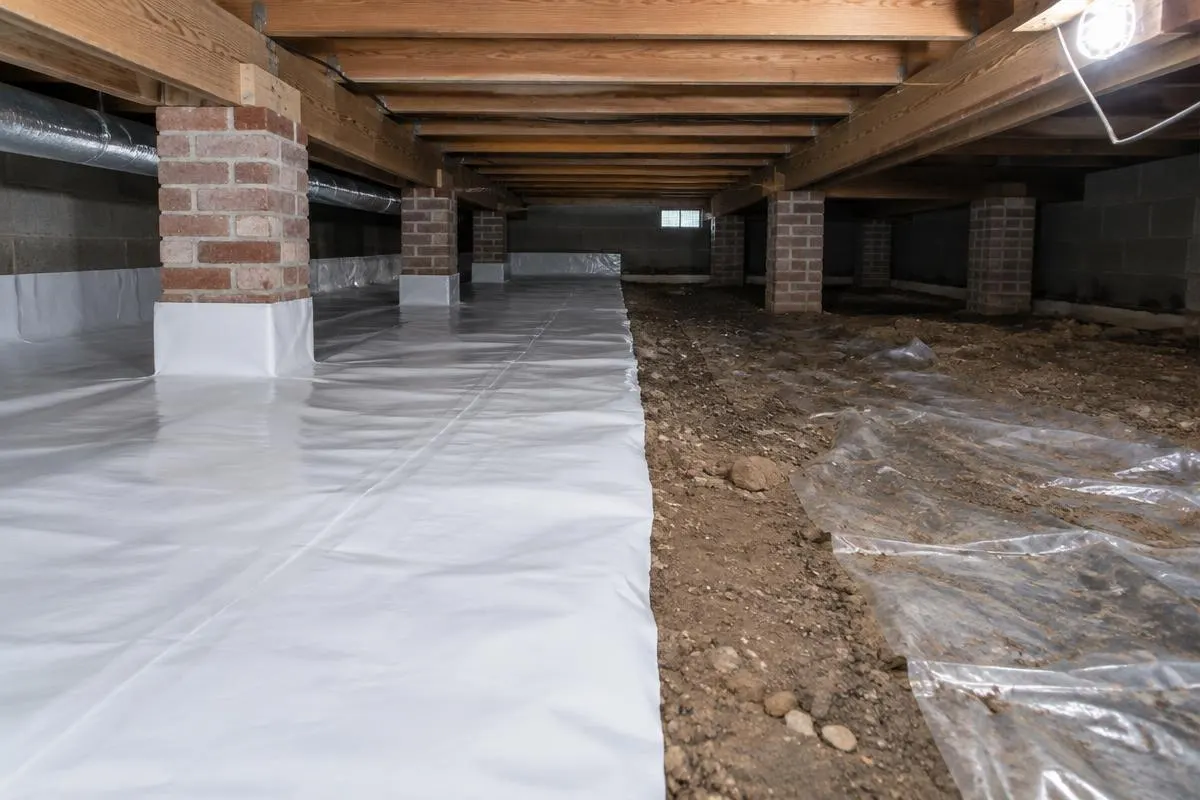
| Vapor barrier | Plastic ground cover over the soil; vents usually stay open. | Mostly dry crawl space with bare or failed plastic and no condensation. | $1,200–$4,000 |
| Structural repair | Sistered or replaced joists, new posts or piers, beam replacement. | Floors already sag, bounce or feel soft; wood is rotted or damaged. | $1,500–$4,000 (support beam); $2,500–$8,000 (foundation repair) |
Section 3 · Published ranges
What crawl space work costs
HomeGuide publishes encapsulation at $3–$10 per square foot, with a typical total of $3,000–$15,000. Where your project lands depends on square footage, access, standing water and drainage, mold or rot found, liner thickness, dehumidifier size and any structural work.
| Item | Published range | Source |
|---|---|---|
| Crawl space inspection | $100–$250 | Encapsulation guide |
| Vapor barrier | $1,200–$4,000 | Encapsulation guide |
| Sealing vents | $150–$450 | Encapsulation guide |
| Dehumidifier, installed | $1,000–$3,500 | Encapsulation guide |
| Insulation | $500–$3,700 | Encapsulation guide |
These are published national ranges, not quotes. Your actual price could be higher or lower. The independent local contractor who inspects your crawl space sets the final price.
Sources: HomeGuide: Crawl Space Encapsulation Cost (updated January 14, 2026); HomeGuide: Crawl Space Repair & Cleaning Cost (updated February 5, 2026). Figures fetched October 24, 2026.
Footprint estimator
Usually close to the footprint of the first floor.
Enter a number to see sq ft × $3–$10.
This only multiplies your number by HomeGuide's published encapsulation range. It doesn't include drainage, repairs or anything an inspection might find.
Section 4 · Conditions
Why moisture is common under Charlotte homes
Hot, humid summers
The Charlotte area has long, humid summers. Warm, damp outdoor air carries a lot of water vapor.
Vented crawl spaces
Many homes here have foundation vents. In summer they can pull that humid air under the house, where cooler ducts and framing collect condensation.
Red clay soil
The region's red clay soils drain slowly, so after heavy rain water can sit against foundations and collect in low spots of a crawl space.
None of this means every crawl space is wet. It means moisture is worth measuring, which is why the inspection starts with readings rather than a sales pitch.
Section 5 · Sequence
What a project looks like
- 01
Inspection and moisture readings
Humidity and wood moisture readings, a walk through every bay, photos of what was found.
- 02
Written scope
A list of recommended work in priority order, with materials and a price from the contractor.
- 03
Cleanout and repairs
Debris and failed insulation out; rotted wood repaired; drainage or a sump added if water gets in.
- 04
Liner and vent sealing
Vapor barrier or full encapsulation liner, seams taped, vents and rim gaps sealed.
- 05
Dehumidifier
Sized to the space, drained to a pump or drain, humidity target set.
- 06
Follow-up check
A later reading to confirm the space is holding dry, and a simple maintenance note for you.
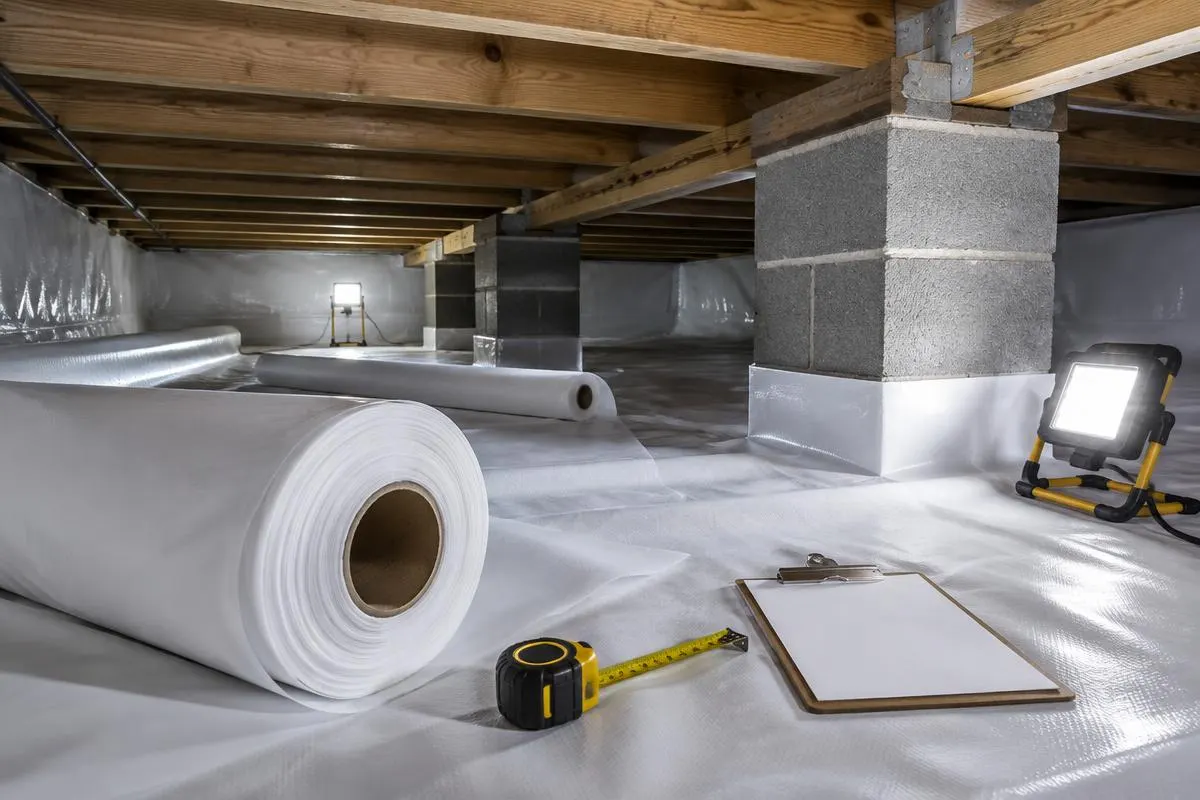
Not every project has every step. A dry crawl space might only need a new vapor barrier; a wet one might need drainage before anything else.
Section 6 · Questions
Common questions
Is crawl space encapsulation worth it?
It is worth it when the crawl space has a moisture problem that a simple vapor barrier won't control: condensation on ducts, musty air, damp wood or mold. If the space is dry and the plastic is intact, a smaller fix may be enough. A moisture reading during the inspection is the best way to tell.
Do I need a dehumidifier?
Most sealed crawl spaces need some way to dry the air, usually a crawl space dehumidifier or a small supply of conditioned air from the HVAC system. A vented crawl space with only a vapor barrier usually doesn't get one.
Should crawl space vents be open or sealed?
Vents were meant to dry the space, but in humid summer weather they can let in air that's wetter than the crawl space can handle. Sealing them makes sense as part of encapsulation with humidity control; closing them with nothing else can trap moisture.
Will encapsulation fix sagging floors?
No. Encapsulation keeps the wood dry going forward, but floors that already sag need structural repair, such as sistered joists or added support posts. The two are often done in the same project, repair first.
How long does a crawl space project take?
A straightforward vapor barrier or encapsulation on an average-size home is often a few days of work. Drainage, mold remediation or structural repair adds time. The contractor will give you a schedule with the written scope.
What about termites?
Termite treatment is done by a licensed pest control company. A crawl space contractor repairs damaged wood afterward. If you encapsulate, ask for a gap at the top of the wall liner so pest inspectors can still see the sill plate.
Next step
Request a crawl space look
Your request goes to an independent local contractor who works in your area. They call you to talk through what you're seeing, schedule an inspection, and give you their own written quote.
Call (980) 553-2333