Service report
Crawl Space Sump Pump Installation in Charlotte, NC
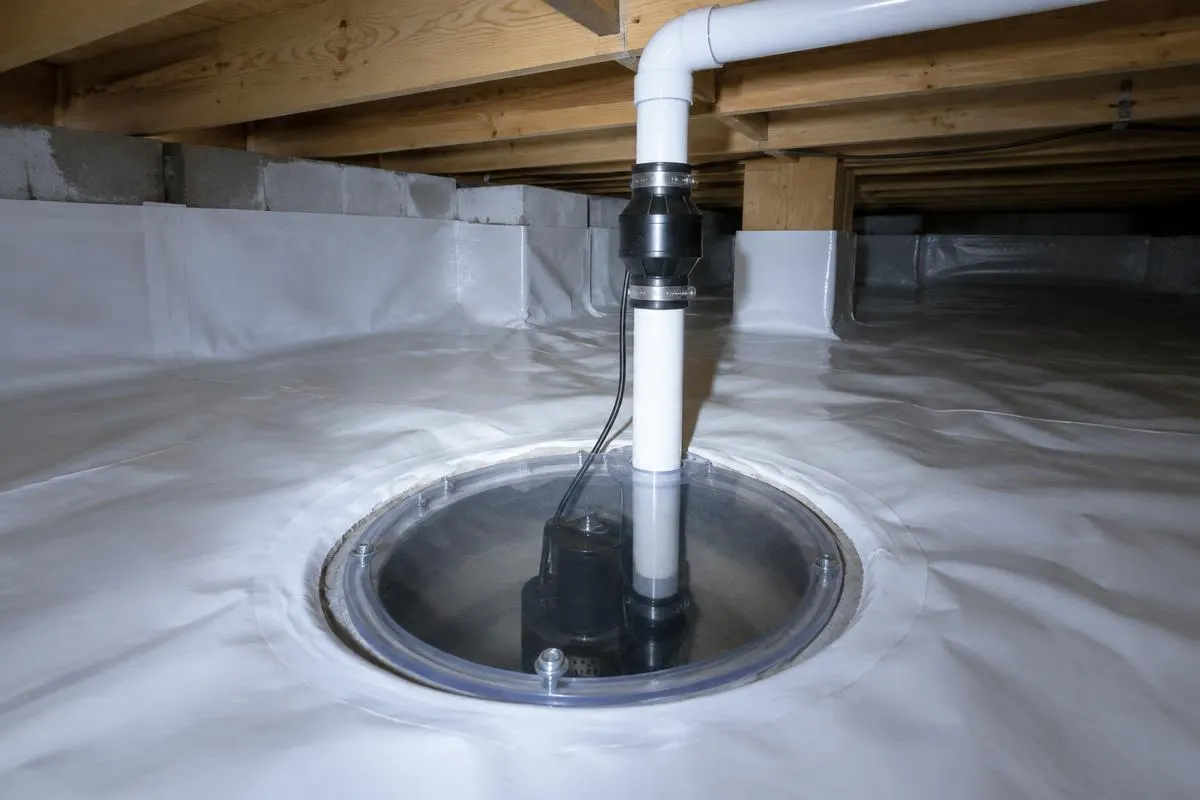
Charlotte Pro Crawl Space connects homeowners with independent local contractors for crawl space sump pump installation in Charlotte, NC. A pump sits in a basin below the crawl space floor and moves collected water through a discharge line away from the foundation. It fits a liquid-water problem, not simply humid air: the inspection should explain where water enters, how it reaches the basin and where it can safely leave the property.
Why water collects under Charlotte homes
Charlotte's Piedmont red clay can slow downward drainage. After heavy rain, water can temporarily perch above a less-permeable soil layer rather than draining through it. That does not mean every wet crawl space has a high regional water table: roof runoff, surface grading and plumbing leaks need checking too.
On sloped lots, runoff from the uphill side can collect against a foundation and enter low crawl space bays. Standing water on a vapor barrier shows a collection problem, but not its source. A useful inspection distinguishes water below the liner from water above it and checks whether exterior grading or a gravity drain could solve the issue before specifying a pump.
Signs that point here
- Puddles return in the same low corner after heavy rain, even after downspouts are directed away from the house
- Standing water sits on top of the vapor barrier, or the liner lifts as water collects underneath
- Mud lines on masonry piers or foundation walls show that water has risen and receded
- An existing pump hums without moving water, cycles repeatedly or leaves its basin full
- An interior drain has no workable gravity outlet and needs a pumped discharge
What's involved
Step 01
A basin that collects water, not just a hole for a pump
A rigid sump basin is set below crawl space floor level at a collection point that remains accessible. Where water enters along several walls, a perforated perimeter drain in washed stone can feed the basin. Excavation must avoid undermining foundation footings or pier supports; basin depth and location belong in the written scope.
Step 02
Submersible pump, float switch and check valve
A submersible pump operates inside the basin. Its float switch needs unobstructed travel, and a check valve on the discharge limits water flowing back when the pump stops. Compare the manufacturer's flow rating at the actual vertical lift and pipe run, not horsepower alone. Ask for the pump model, basin dimensions and service access in writing.
Step 03
A discharge line with a defined destination
Rigid PVC discharge piping carries water through a sealed foundation penetration to a suitable outlet away from the foundation. The contractor should account for pipe diameter, lift, bends, freezing exposure and erosion at the outlet. A sloped Charlotte lot does not automatically provide a safe discharge: the route should not send water back under the house or onto a neighbor's property. Confirm local discharge requirements before installation.
Step 04
Liner tie-in, electrical supply and backup options
In an encapsulated crawl space, the liner seals to the basin flange and penetrations, with a removable gasketed lid limiting vapor escape. Water beneath the liner can reach the collection system; water sitting on top needs its source traced rather than a casual hole cut in the plastic. Electrical supply should meet applicable requirements. A separate battery-powered backup pump, charger and high-water alarm are options to price individually; battery runtime depends on pumping demand and battery condition.
Typical sump pump installation cost range
HomeGuide's Sump Pump Installation Cost guide gives a typical national installed range of $600–$2,500. Your actual cost could be higher or lower depending on the property and scope. This is a general installation range, not a Charlotte crawl space quote; new drainage, difficult access and a long discharge run can change the scope substantially.
Source: HomeGuide: Sump Pump Installation Cost.
What affects the installation price
- New basin excavation versus replacing a pump in a usable existing basin
- Low clearance, a small access door and digging through clay or rock
- Drain length and washed stone needed to bring water to the basin
- Discharge distance, vertical lift and the outlet treatment
- Pump capacity at the required lift, electrical work and an accessible sealed lid
- Separate battery backup, charger, high-water alarm and liner repairs
| Published item | Range |
|---|---|
| Waterproofing | $2,000–$6,000 |
The existing HomeGuide waterproofing range covers a broader water-control scope, not a standalone pump. Ask whether the written quote includes the basin, drainage, discharge, electrical work and liner tie-in; do not add the two national ranges together as if they were separate required charges.
These are published national ranges, not quotes. Your actual price could be higher or lower. The independent local contractor who inspects your crawl space sets the final price.
Sources: HomeGuide: Crawl Space Encapsulation Cost (updated January 14, 2026); HomeGuide: Crawl Space Repair & Cleaning Cost (updated February 5, 2026). Figures fetched October 24, 2026.
How the installation process works
Trace the source after rain
Describe when water appears and which side of the house gets wet. The contractor checks gutters, downspouts, grading, plumbing leaks and crawl space low points. Exterior runoff corrections may reduce or remove the need for a pump.
Compare a written water-control scope
The scope identifies the basin location, drainage route, pump model, discharge destination and power supply. Backup and alarm options should be separate line items. The independent contractor sets the price and schedule; this site connects you with that provider rather than performing the installation.
Install, connect and test
The basin, drain and discharge go in before the liner is finished around them. A water test should demonstrate float activation, pump shutdown, check-valve operation and flow at the exterior outlet. If a backup is included, ask for a demonstration with primary power disconnected.
Leave a maintenance plan
Keep the basin lid and discharge outlet reachable. Follow the manufacturer's schedule for clearing debris, testing the float and checking backup batteries. A pump that ran during one test still needs periodic checks, especially before wet weather.
Related water-control and repair services
Crawl space drainage and French drains bring water to a collection point. Crawl space encapsulation seals ground vapor after liquid water is managed. Dehumidifier installation addresses humid air, while sagging floor and joist repairs address framing already damaged by moisture.
Areas served
Requests cover Charlotte, NC, Ballantyne, NC, Matthews, NC, Mint Hill, NC, Pineville, NC, Huntersville, NC, Cornelius, NC, Mooresville, NC, Concord, NC, Gastonia, NC, Indian Trail, NC, Monroe, NC, Waxhaw, NC, Weddington, NC, Fort Mill, SC, Rock Hill, SC, Indian Land, SC. The independent contractor confirms whether the property's access, drainage conditions and discharge route fit the work they offer.
Questions about crawl space sump pump
Do I need a sump pump when I encapsulate my crawl space?
You need a sump pump only when liquid water needs a pumped outlet; encapsulation alone does not make a pump necessary. A mostly dry crawl space with humid air may need a liner and dehumidifier instead. Resolve active water entry before sealing the space.
Will a sump pump remove water standing on the vapor barrier?
A sump pump removes water that reaches its basin, not isolated puddles on top of the vapor barrier. The contractor must trace whether the puddles come from runoff, a plumbing leak or condensation and provide a collection path without compromising the liner's vapor seal.
Where should a crawl space sump pump discharge?
The discharge should end at a suitable drainage outlet away from the foundation, subject to local requirements. The route must avoid recirculating water under the house, creating erosion or dumping water onto neighboring property. Ask to see the proposed outlet before agreeing to the scope.
Is a battery backup worth adding?
A battery backup is worth considering when the crawl space takes water during storms that can interrupt power. It is optional and has limited runtime; ask how capacity is estimated for your pumping demand and how the battery and alarm will be maintained.
Can I use a sump pump instead of a dehumidifier?
No: a sump pump moves liquid water, while a dehumidifier removes moisture from the air. A wet, sealed crawl space may need both, but neither repairs rotten joists or replaces a drainage plan. The inspection should separate those problems in the quote.
Want someone to look under your house?
Call or send a short request. An independent local contractor will contact you to schedule an inspection and give you a written quote.
Next step
Request a look: crawl space sump pump
Your request goes to an independent local contractor who works in your area. They call you to talk through what you're seeing, schedule an inspection, and give you their own written quote.
Call (980) 553-2333