Service report
Foundation vent sealing for crawl spaces
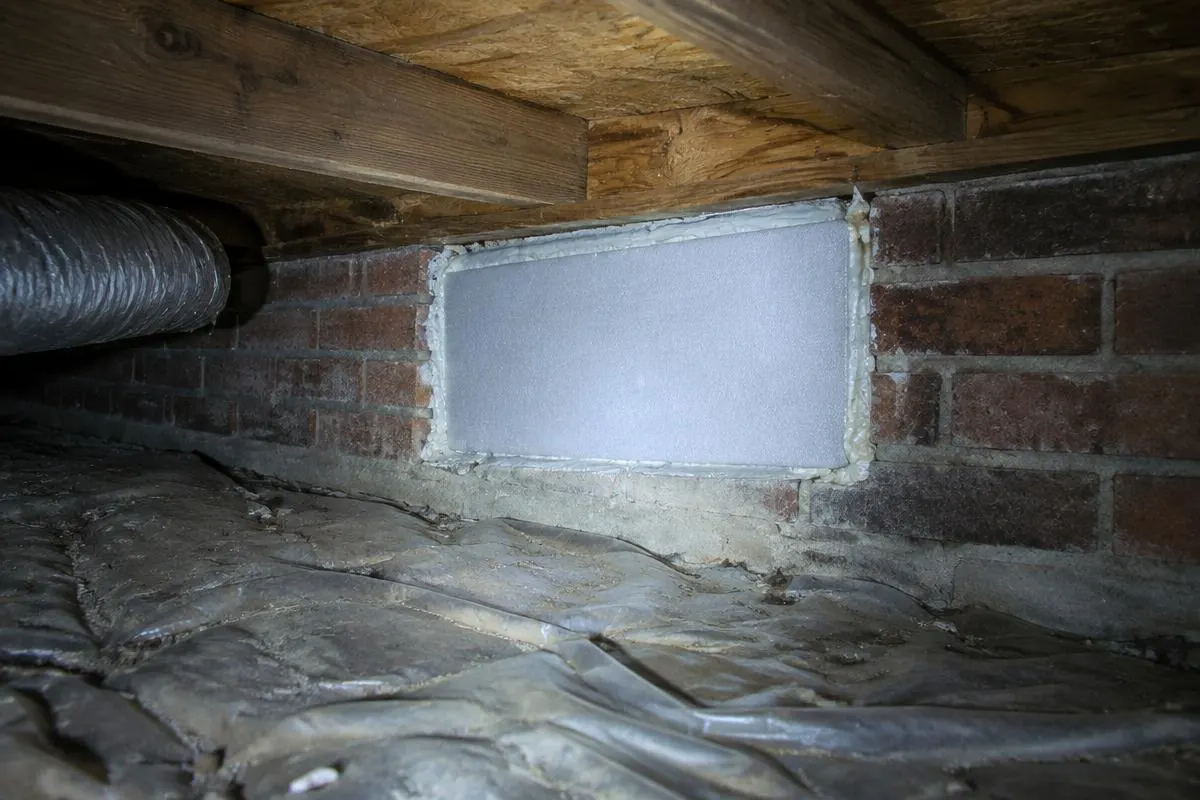
Foundation vents were meant to air out the crawl space. In a humid summer, though, the air they bring in is often wetter than the cooler air under the house, and it can condense on ducts and framing. Sealing the vents closes those openings, but it should only happen as part of a plan that also controls humidity inside.
Signs that point here
- Condensation under the house during humid summer weeks
- Vent screens that are broken and letting animals in
- Cold floors in winter above open vents
- A dehumidifier that can't keep up because vents are open
What's involved
Step 01
Check for combustion appliances
If a gas furnace or water heater draws air from the crawl space, the contractor must address combustion air before closing vents.
Step 02
Fit the closures
Each vent is closed with a fitted rigid foam block, a sealed vent cover or masonry, then caulked or foamed at the edges.
Step 03
Seal the other leaks
Gaps at the rim, around pipes and at the access door get sealed too; vents are rarely the only air path.
Step 04
Pair with drying
With vents closed, a dehumidifier or conditioned air keeps the sealed space dry.
What moves the price
- Number and size of vents
- Closure type
- Rim and penetration sealing included
- Whether an access door is replaced
| Published item | Range |
|---|---|
| Sealing vents | $150–$450 |
These are published national ranges, not quotes. Your actual price could be higher or lower. The independent local contractor who inspects your crawl space sets the final price.
Sources: HomeGuide: Crawl Space Encapsulation Cost (updated January 14, 2026); HomeGuide: Crawl Space Repair & Cleaning Cost (updated February 5, 2026). Figures fetched October 24, 2026.
Questions about foundation vent sealing
Should I seal my crawl space vents?
Sealed vents usually make sense when the crawl space also gets a liner and humidity control. Closing vents with nothing else can trap moisture.
Are vent covers with automatic louvers enough?
They close in cold weather but still let humid summer air in. In a sealed approach, the vents are closed year-round.
Does code allow sealed crawl spaces?
Residential codes allow unvented crawl spaces when specific conditions are met, such as a ground cover and a drying method. The contractor should confirm local requirements.
Want someone to look under your house?
Call or send a short request. An independent local contractor will contact you to schedule an inspection and give you a written quote.
Next step
Request a look: foundation vent sealing
Your request goes to an independent local contractor who works in your area. They call you to talk through what you're seeing, schedule an inspection, and give you their own written quote.
Call (980) 553-2333