Charlotte, NC
Crawl Space Vapor Barrier Installation in Charlotte, NC
Charlotte Pro Crawl Space connects Charlotte homeowners with independent local contractors for crawl space vapor barrier installation, from replacing torn plastic to laying sealed, reinforced liners over the clay. Call (980) 553-2333 or send the form below, and a contractor who works in Charlotte will contact you to inspect and quote.
Why Charlotte crawl spaces need a good ground cover
Charlotte has long, hot, humid summers, and a vented crawl space draws that outdoor air underneath the house. The ground itself adds more: most of Mecklenburg County sits on Piedmont red clay, which holds water and drains slowly, so the soil under a house can stay damp long after a storm and keep releasing moisture into the space.
A large share of Charlotte's housing, from post-war ranches in neighborhoods like Plaza Midwood, Myers Park and Cotswold to split-levels and two-stories built through the 1990s, sits on vented crawl spaces with masonry piers. Many of those homes still have the original thin plastic, or none at all, which is where a new vapor barrier usually starts.
What vapor barrier installation involves
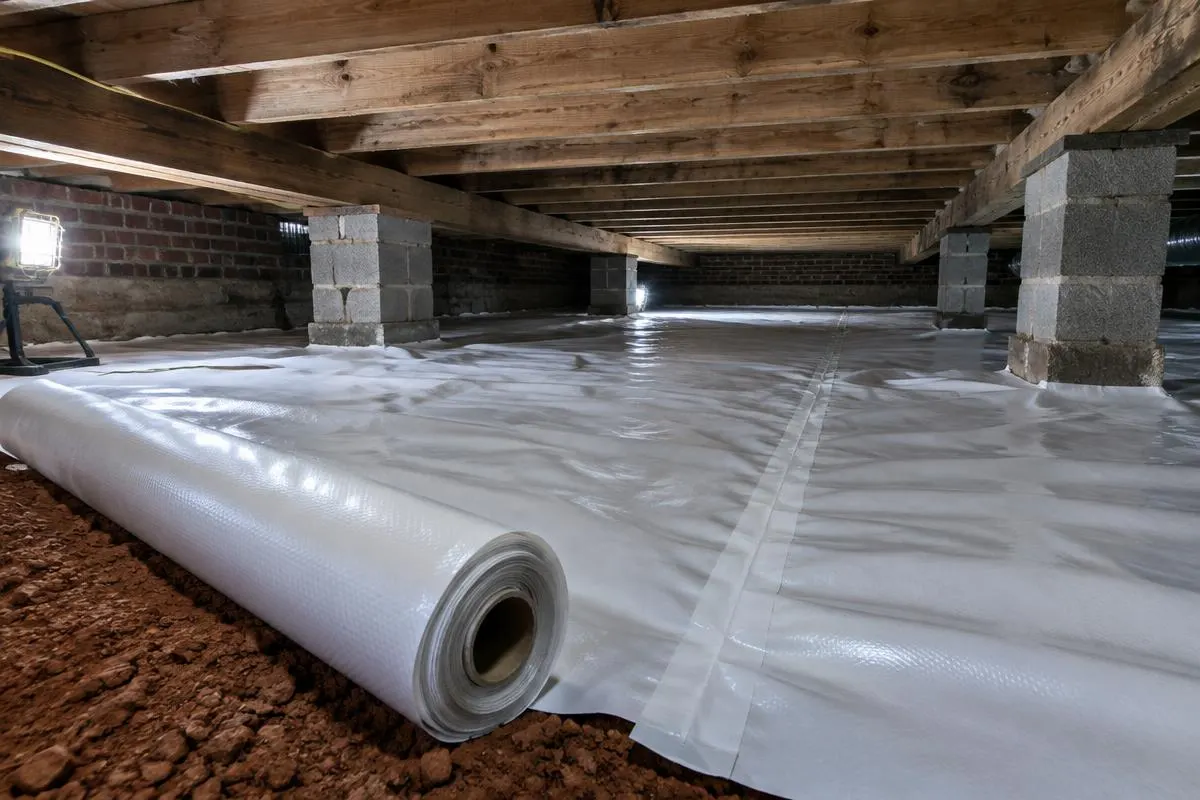
A crawl space vapor barrier (often called a vapor retarder or ground cover) is a polyethylene sheet laid over the soil to slow water vapor rising into the space and into the wood framing above. It is the base layer of encapsulation, but it can also be installed on its own.
6-mil plastic vs. 12 to 20 mil reinforced liners
Basic 6-mil polyethylene is inexpensive and blocks vapor, but it punctures and shifts easily. Reinforced liners in the 12 to 20 mil range have a woven or string-reinforced core, hold up better to foot and knee traffic, and are the usual choice when the liner will also run up the walls. Thickness is one of the main items to compare between quotes.
Materials you'll see in the scope
- Polyethylene sheeting, 6-mil or reinforced 12 to 20 mil
- Seam tape and butyl tape for overlapped joints
- Pier wraps or cut-and-taped collars around each masonry pier
- Termination bar, mechanical fasteners and sealant where the liner meets the wall
- Ground stakes or pins to hold the liner in place on the clay
Signs you may need a new vapor barrier
- Plastic that is torn, bunched up or missing in sections
- Bare red clay visible across part of the crawl space
- A musty smell indoors during humid months
- Condensation on ducts, pipes or the underside of the subfloor
- Damp or stained wood on joists and sill plates
- Insulation batts sagging or lying on the ground
Typical cost range
HomeGuide's published national range for a crawl space vapor barrier is $1,200–$4,000. This is a typical range; actual cost could be higher or lower depending on the property and scope.
| Published item | Typical range |
|---|---|
| Crawl space inspection | $100–$250 |
| Vapor barrier | $1,200–$4,000 |
| Sealing vents | $150–$450 |
| Dehumidifier, installed | $1,000–$3,500 |
| Encapsulation, typical total | $3,000–$15,000 |
These are published national ranges, not quotes. Your actual price could be higher or lower. The independent local contractor who inspects your crawl space sets the final price.
Sources: HomeGuide: Crawl Space Encapsulation Cost (updated January 14, 2026); HomeGuide: Crawl Space Repair & Cleaning Cost (updated February 5, 2026). Figures fetched October 24, 2026.
What affects the price
- Square footage of the crawl space floor
- Clearance height and how hard the space is to move through
- Liner thickness (6-mil vs. 12 to 20 mil reinforced)
- Whether the liner stops at the floor or runs up the walls
- Number of piers and penetrations to cut and seal around
- Cleanout, drainage or wood repair needed before the liner goes down
Try the footprint estimator on the crawl space costs page.
How the process works
Step 01
Inspection and moisture readings
The contractor checks clearance, measures the floor area, takes wood moisture readings on joists and sill plates, and looks for standing water, torn plastic, mold and pest activity.
Step 02
Written scope
The scope should name the liner thickness, whether it stops at the floor or runs up the walls, how seams are sealed, and any prep work that has to happen first.
Step 03
Cleanout and prep
Old plastic, fallen insulation and debris come out. Sharp rocks are removed or covered, and any water problem is handled with grading, a drain or a sump basin before the new liner goes down.
Step 04
Laying the liner
Sheets are rolled out over the clay, overlapped at the seams (commonly by about 6 to 12 inches) and taped. Pieces are cut and sealed around each masonry pier and plumbing penetration.
Step 05
Edges and walls
For a basic ground cover the liner stops a short way up the wall. For a fuller job it runs up the foundation wall and is fastened with a termination bar or mechanical fasteners and sealant.
Step 06
Final walk-through
You or the contractor should be able to see that seams are closed, the liner is not torn, and the access door shuts cleanly. Humidity can be checked later with a simple hygrometer.
Related services
See the general vapor barrier installation page, crawl space encapsulation, foundation vent sealing, dehumidifier installation and cleanout and debris removal.
Areas served
Requests come from across Charlotte and Mecklenburg County, and contractors in the network also work in surrounding towns. See the full service area.
Charlotte vapor barrier questions
What thickness of vapor barrier is best for a Charlotte crawl space?
For most Charlotte crawl spaces, a reinforced liner in the 12 to 20 mil range is the more durable choice. Plain 6-mil polyethylene meets a basic ground-cover role, but it tears easily when a plumber, HVAC tech or pest inspector crawls over it, and many older Charlotte homes still have thin, torn 6-mil plastic.
How much does a crawl space vapor barrier cost in Charlotte?
HomeGuide's published national range for a crawl space vapor barrier is $1,200–$4,000. Actual cost could be higher or lower depending on the property and scope, and the contractor who inspects your crawl space sets the final price.
Is a vapor barrier the same as encapsulation?
No, a vapor barrier is one part of encapsulation. A vapor barrier covers the ground (and sometimes part of the walls); full encapsulation also runs the liner up the walls, seals the vents and access door, and adds a dehumidifier to control humidity.
Will a vapor barrier fix standing water under my house?
No, a vapor barrier slows moisture rising from the soil but does not move liquid water. Water that pools on Charlotte's slow-draining red clay after heavy rain needs gutter, grading, drain or sump pump work before or along with the liner.
How long does a vapor barrier installation take?
Most crawl space vapor barrier installs take a day, sometimes two. Low clearance, a large footprint, heavy cleanout or drainage work adds time, and the written scope should say so.
Want someone to look under your house?
Call or send a short request. An independent local contractor will contact you to schedule an inspection and give you a written quote.
Next step
Request a crawl space look in Charlotte
Your request goes to an independent local contractor who works in your area. They call you to talk through what you're seeing, schedule an inspection, and give you their own written quote.
Call (980) 553-2333